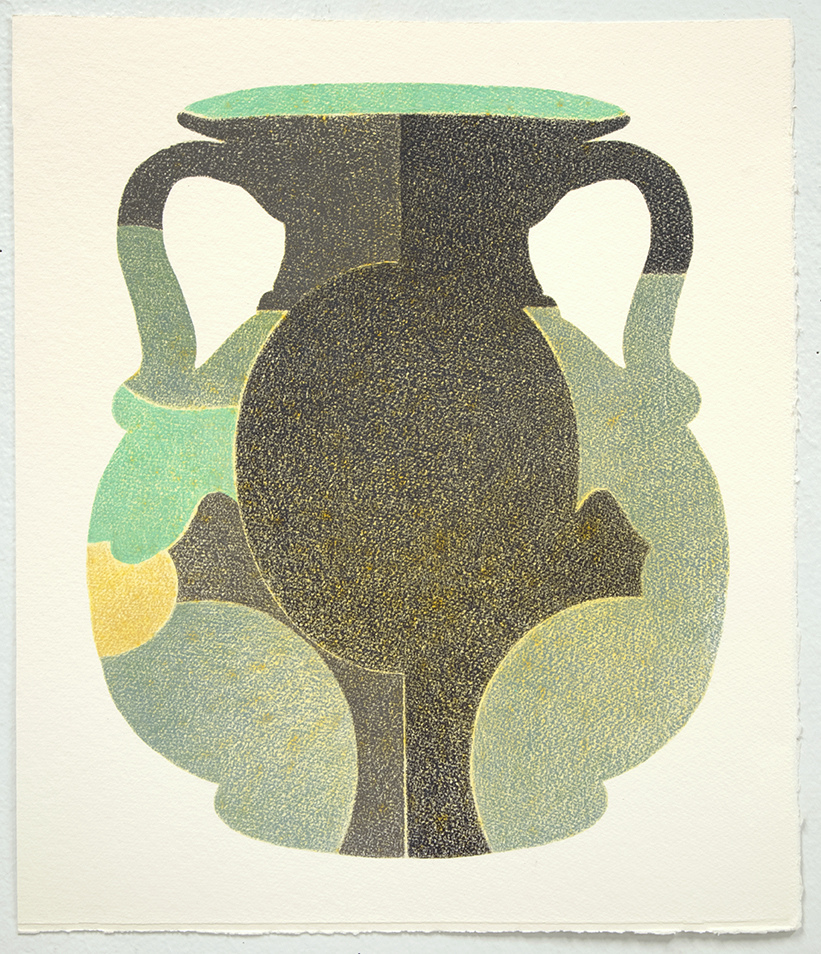
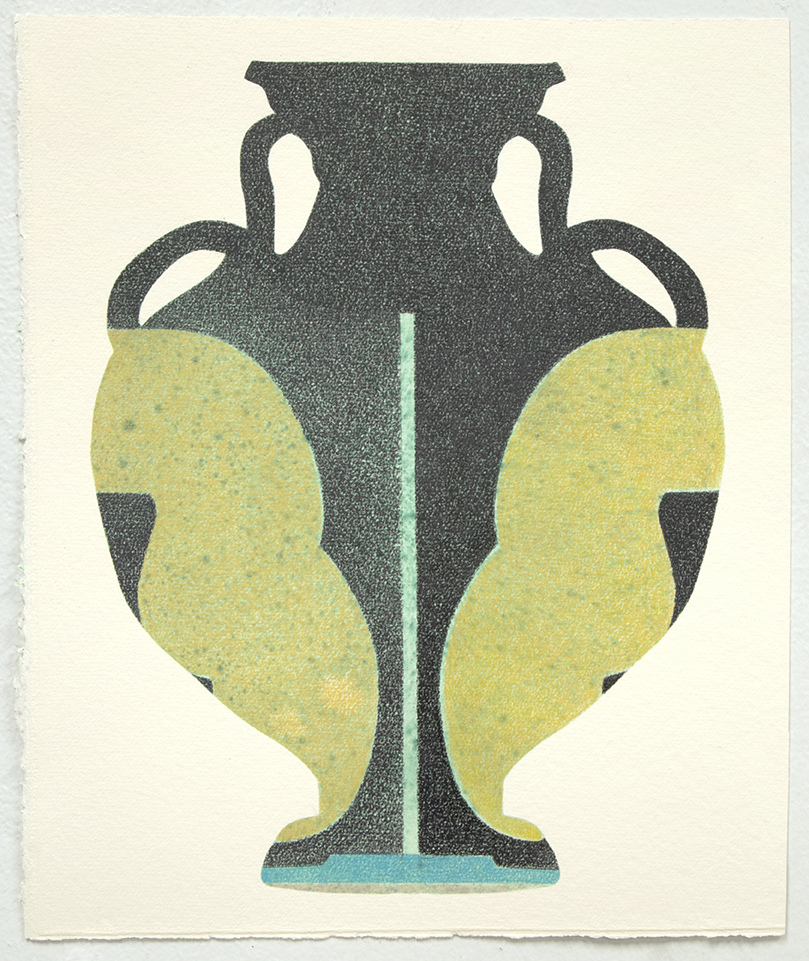
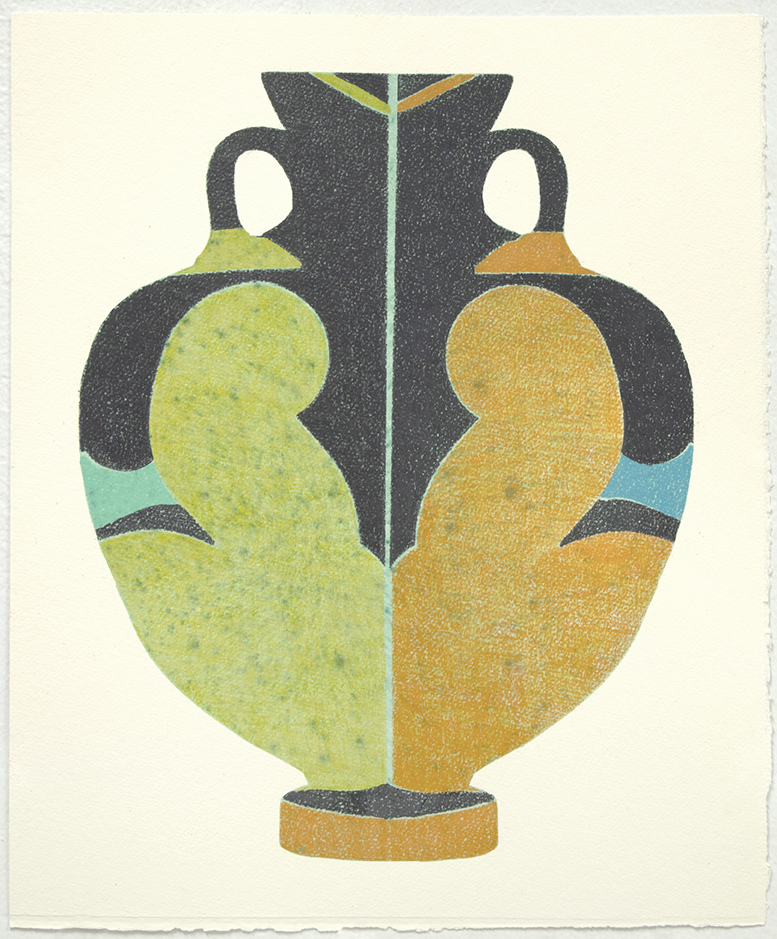
My work is grounded in a familiar vocabulary of forms and processes—wanderings I return to with reverence. I prefer simple structures that verge on the unexpected but ultimately remain within boundaries. The cut edge is perhaps the most evident form of restraint. It creates a sense of containment that allows new branches of thought to emerge through repetition.
I work somewhere between painting and drawing. In drawing, layers of graphite, colored pencil, and ink accumulate with no visible hierarchy. This allows the vulnerability of thinking through an image to be as present as the final decisions. In painting, I create fields of nearly indiscernible marks: a quiet, static charge across the surface. My process is slow and refined, a reshaping of the image that I think of as polishing a rough stone. Through repetition and time, form is continually turned until a new facet catches.
Earlier in my career, I articulated light as a means toward the sublime—drawings were illuminated. My current work builds a flat field of color and texture, but that sense of illumination is still present, having been transposed directly into the material.
I think of lineages—Ancient Greek pottery and Post-painterly Abstraction—but the early cave painters are most fitting—not in image, but in impulse. My work is not invented as much as unearthed—tendencies, sensitivities, and exactness that were always there but simply made present. I am compelled to give those qualities form—my hand on the cave wall.
I work somewhere between painting and drawing. In drawing, layers of graphite, colored pencil, and ink accumulate with no visible hierarchy. This allows the vulnerability of thinking through an image to be as present as the final decisions. In painting, I create fields of nearly indiscernible marks: a quiet, static charge across the surface. My process is slow and refined, a reshaping of the image that I think of as polishing a rough stone. Through repetition and time, form is continually turned until a new facet catches.
Earlier in my career, I articulated light as a means toward the sublime—drawings were illuminated. My current work builds a flat field of color and texture, but that sense of illumination is still present, having been transposed directly into the material.
I think of lineages—Ancient Greek pottery and Post-painterly Abstraction—but the early cave painters are most fitting—not in image, but in impulse. My work is not invented as much as unearthed—tendencies, sensitivities, and exactness that were always there but simply made present. I am compelled to give those qualities form—my hand on the cave wall.